

Energy Savings Made Simple: What is An Energy Audit?
Energy Savings Made Simple: What is An Energy Audit?
You hear that your business could benefit from an energy audit, but what does that actually look like?
Instead of guessing where your utility dollars are going, you get an in-person energy expert who walks you through your facility’s energy processes and pinpoints exactly where critical cost savings may be slipping through the cracks. And it doesn’t stop at identifying problems. You receive clear recommendations and a tailored action plan specifically for your business, your building, and your budget.
Four Steps of An Energy Audit
1. Meet Your Energy Expert: Every audit begins with a conversation. Your energy expert meets with your facility manager to understand your operations, current systems, challenges, and goals.
2. Facility Assessment: Next comes a hands-on walkthrough. The expert evaluates lighting, building conditions, and key equipment systems, gathering data to identify where energy and money may be slipping away.
3. Action Plan: After the assessment, you receive a comprehensive report outlining findings, images, and estimated annual energy usage. The data shows where improvements will have the greatest impact and provides recommendations tailored to your facility.
4. Check-Up: Three months after your audit, you’ll receive a follow-up evaluation to reflect on which recommendations were implemented, whether additional assistance is needed, and what energy savings you’ve achieved!
Key Services of An Energy Audit
Energy audits focus on three major areas where small businesses often see the greatest savings:
- Lighting Analysis
- Building Envelope Examinations
- Compressed Air Assessment
Lighting Analysis
One quick change that will ensure you are getting a bang for your buck is upgrading your facility's lighting systems from fluorescent to LED. During the audit, the expert will document your current energy use and compare it to projected LED performance with equal light output, providing you clear, side-by-side data to support a lighting upgrade decision.
Building Envelope Examination
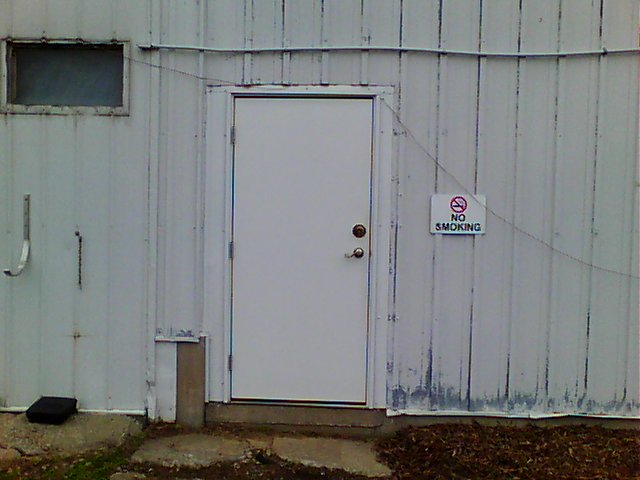
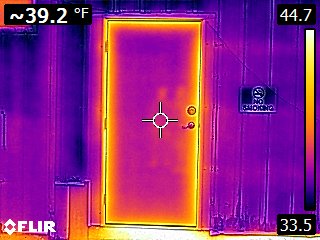
Many small businesses operate in older buildings that may struggle with outdated and inefficient infrastructure. Using thermal imaging technology, the building envelope exam identifies energy loss throughout the facility, most commonly around doors, windows, walls, and roofs. The images below show where air is escaping, helping you prioritize structural improvements that reduce long-term costs.
Compressed Air Assessment
Some of the greatest energy-saving potential relative to implementation cost is compressed air upgrades. Using ultrasonic leak detection equipment, the audit identifies and quantifies leaks within compressed air systems. You will receive a report that includes images of each leak and the estimated annual energy loss. Often, the fixes are simple and low-cost to implement.
Energy Audits Provide Lasting Solutions
An energy audit gives your business detailed data, visual documentation, and expert guidance. Typically taking just one to four hours, it equips you to make informed decisions that improve both current operations and long-term efficiency. Move forward with energy savings with confidence and a clear action plan.
For small businesses in Iowa seeking energy efficiency assistance, request a free energy audit with the IWRC at https://iwrc.uni.edu/energy-efficiency/small-businesses